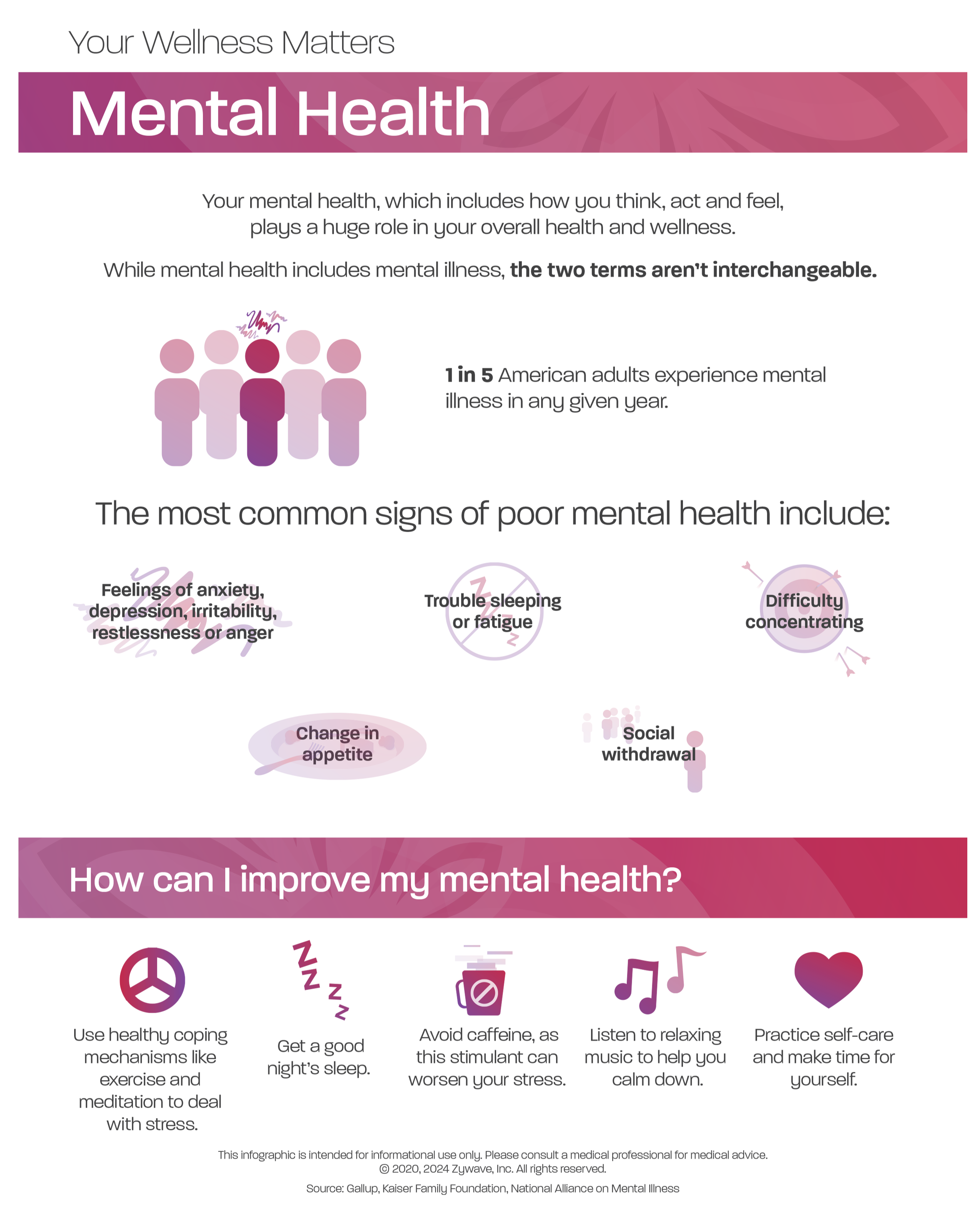
Remember, it’s common to feel overwhelmed or burned out during the summer.
If you need help, don’t hesitate to contact a healthcare provider.
Summer Stress
While many people experience improved mental health and mood during the summer due to longer days and increased sunlight, this season can be stressful for others. Summertime stressors and extreme weather conditions can even exacerbate symptoms of seasonal affective disorder.
To cope effectively, it's essential to identify what triggers anxious or depressive feelings. Summertime triggers might include weather-related factors such as heat, sun, or humidity, and financial pressures from spending on trips, experiences, childcare, or the inability to take time off.
Here are some tips to support your mental well-being during the summer:
- Get outside. Spending time in nature can improve your mood by reducing stress, combating anxiety and depression, and enhancing cognitive function.
- Stay active. Exercise can help reduce stress, so prioritize daily movement.
- Maintain a healthy sleep schedule. Long, hot summer days can make sleeping difficult, but regulating your sleep is critical to improving your overall mood.
- Stick with a routine. Establishing and following a routine can help you feel more in control and motivated.
- Avoid comparisons. It’s easy to get overwhelmed by social media. Try not to compare your activities with others to keep the fear of missing out (FOMO) at bay.
- Be realistic. Manage your expectations and be realistic about what you can accomplish during the summer.
Remember, it’s common to feel overwhelmed or burned out during the summer. If you need help, don’t hesitate to contact a healthcare provider.
The Influence of AI on Mental Health Care
Artificial intelligence (AI) in mental health care is still in its early stages but has the potential to become more prevalent in the future. Some people are turning to AI platforms, like ChatGPT, for mental health support, but this can be risky as the technology lacks the qualifications of a trained mental health professional.
Here are some potential benefits of using AI for mental health care:
- Increased accessibility
- Enhanced mental health literacy
- Preserved anonymity
However, it's important to recognize the pitfalls of AI in mental health, such as:
- False information
- Misinterpretation of data
- Ethical concerns (e.g., data privacy and bias)
Some AI platforms even include disclaimers stating they shouldn’t be used to diagnose serious conditions, provide treatment instructions, or manage life-threatening issues.
In today’s digital world, it's easy to feel overwhelmed when seeking information. Accurate mental health advice requires using all available sources while understanding their limitations. For example, AI currently does not consider your lifestyle habits, medical history, and other personal details when providing information.
Although AI and chatbots are not meant to replace professional healthcare, they can help increase mental health literacy and provide a platform for anonymously discussing concerns. However, they are no substitute for traditional forms of therapy, such as consulting a certified professional. Always contact a qualified medical provider for the most accurate, personalized information and guidance.
For more information on workplace safety, please contact Friedlander Group’s safety expert Ray Sullivan –raymonds@friedlandergroup.com
* * * *
Additional resources can be found at: https://ww3.nysif.com/wellness/index
Sources: Mental Health Minute, July 2024 - NYSIF